
In the early days of an OnlyFans management agency, you recruit wherever you can. You sign newer creators who are glad of any help, and at that stage the messy edges don't matter much. They don't mind a loose spreadsheet or a Monday message chasing an invoice.
That changes when you try to recruit established talent, creators already clearing $20,000 to $50,000 a month on their own.
Those creators aren't just looking for someone to schedule posts. They're protective of their brand, their page and their money, and they've usually seen how agency arrangements go wrong. Asking for their wallet passwords, or expecting a large manual transfer every week, is likely to end the conversation.
Here's what experienced creators tend to look at, and how a clean payout setup can help your pitch.
1. What experienced creators flag
Top earners get recruitment messages constantly, most of them from agencies running informal setups. When one evaluates an agency, the financial onboarding is one of the first places she looks. Three things tend to raise concern.
- Credential requests. "We'll set up a Paxum or Revolut account in your name, but our team will hold the passwords and 2FA." To an established creator, this can sound like someone taking control of her money and her identity. It's a reasonable thing to be wary of, because shared access to an account in her name creates real risk for her too.
- The manual invoice burden. "OnlyFans pays you 100%, then you wire us our 40% every Monday." It sounds simple, but experienced creators know it means calculating platform fees, tracking chargebacks and sending a five-figure transfer by hand every week.
- The "trust us" spreadsheet. Her earnings are tracked in a private file and she has no live view of them. Many high earners have been burned by a previous manager miscalculating commissions or leaving out tips. They're unlikely to hand over an account on trust alone.
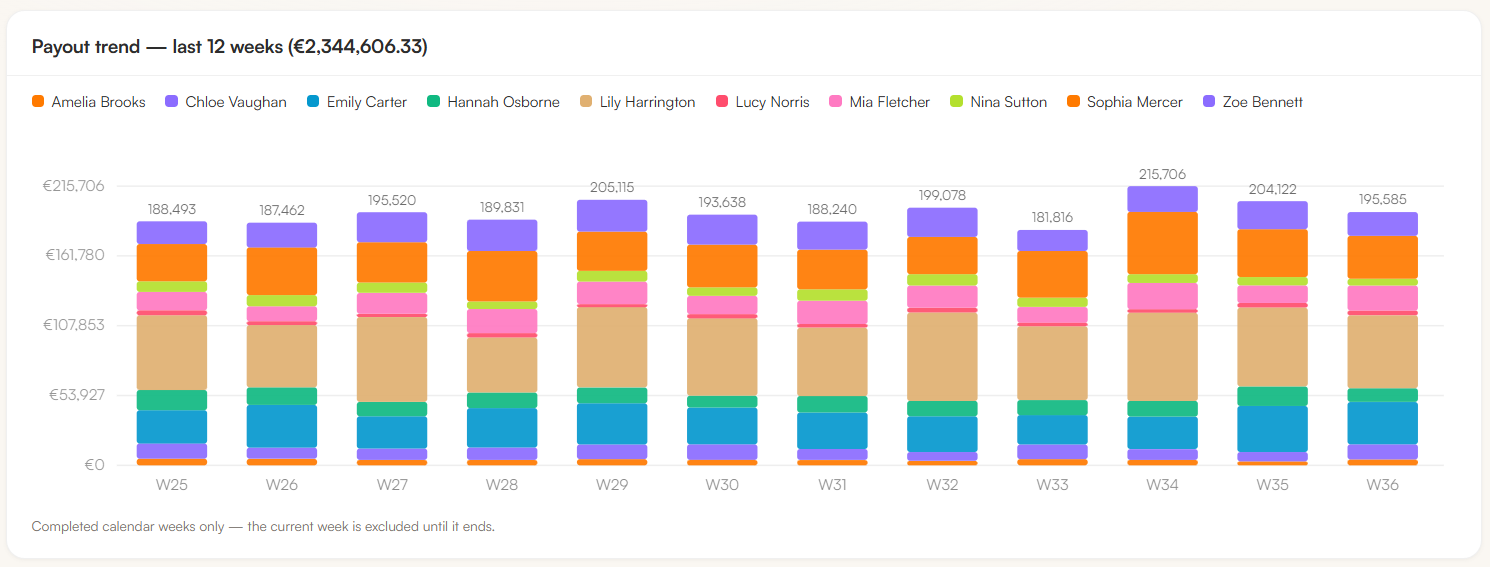
2. What a stronger pitch sounds like
To sign a creator who's already doing well, an agency has to look like a professional operation. That means a financial setup where her identity stays hers, she can see her numbers, and she isn't taking on extra admin.
A pitch built on that is simple and specific. Here are the points to cover on a discovery call, in plain terms:
- Her account stays hers. It's opened in her own name with a licensed banking partner, and she holds the login. The agency never has her credentials.
- The split is stated up front. Both sides agree it in the contract: her percentage, the agency's percentage, and whether it's calculated on gross or net.
- The split runs automatically. When OnlyFans pays out, the agreed split executes at the bank. Her share goes to her account and the agency's share goes to the agency's. There's no invoice and no transfer for her to send.
- She can see everything. She gets her own portal showing the same reconciled numbers the agency sees, so she can check any payout at any time.
An agency should avoid making promises it can't back, such as "completely risk-free" or "you'll never have a problem." The point of the pitch is that the structure is transparent, not that it's perfect.
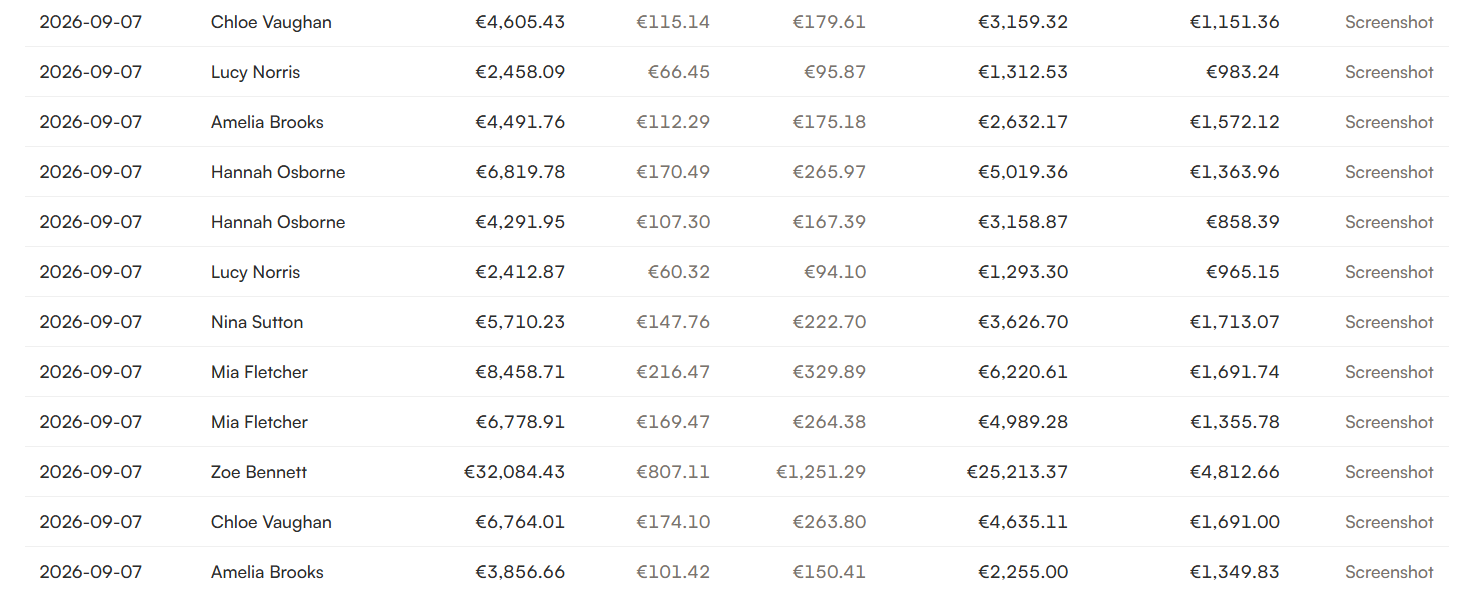
3. What a well-structured setup addresses
An agency that builds this into its onboarding speaks to the objections above directly.
- Account ownership. The payout account matches her verified legal identity, which reduces the name-mismatch problems that come with shared or mismatched accounts. It doesn't make an account immune to review, since platforms and banks run checks for other reasons, but it removes a risk that comes from the setup itself.
- Visibility. She sees her own net earnings in real time, in the same reconciled figures the agency sees. That removes the "trust me" element, and with it a common source of suspicion between agencies and creators.
- No recurring invoice. Because the split executes automatically, there's no weekly request for her to act on, which removes the Monday friction we covered in why creators resent manual invoices. She still sees what the agency's share is, and she should. The difference is that nothing is left pending that either side has to chase.
For how the account structure works in more detail, see how to separate account management from bank ownership.
Frequently asked questions
Why do experienced creators avoid agencies that ask for banking credentials?
Shared access to an account in her name creates risk for her as well as the agency. If the account is flagged, only she can complete the identity checks, and in a dispute the account holder is the one the provider will side with. Many creators have seen this go wrong and won't take it on again.
Does automated payout infrastructure actually help with recruiting?
It can, because it answers the objections experienced creators tend to raise about money. It's one factor among several. Results, communication and the quality of the actual management work matter at least as much.
Should the split terms be explained during the pitch or only in the contract?
In both. Stating the percentage, the calculation basis and how it's paid out during the pitch avoids surprises later and signals confidence in the arrangement. Anything stated verbally should match the written contract.
Does this mean the creator has no admin to do at all?
She still goes through her own verification at onboarding, and she can review her portal whenever she likes. What she doesn't have is a recurring transfer to send, because the split executes automatically.