
When you first launch an OnlyFans agency, the day-to-day runs on constant communication.
You're talking to your creators about content schedules, chatting scripts and traffic targets. The team coordinates in group chats. Every Monday includes a round of messages to reconcile a spreadsheet and ask for a bank transfer.
At one or two creators, that works. It feels collaborative and quick.
Past six and seven figures, it becomes a bottleneck. Instructions get forgotten, messages get buried, invoices create friction and small errors multiply. An agency that depends on people remembering the right step every week can't scale cleanly.
Building an agency that holds up at volume means moving the repeatable parts into systems. Here's how to think about it.
1. Where a conversation-dependent agency breaks
A conversation-dependent agency is one where almost nothing happens unless a person sends a message, checks a sheet or gives an approval. Three problems show up as it grows:
- The communication tax. More creators and more chatting shifts mean exponentially more internal messages. Senior people end up managing notifications instead of traffic strategy or recruiting.
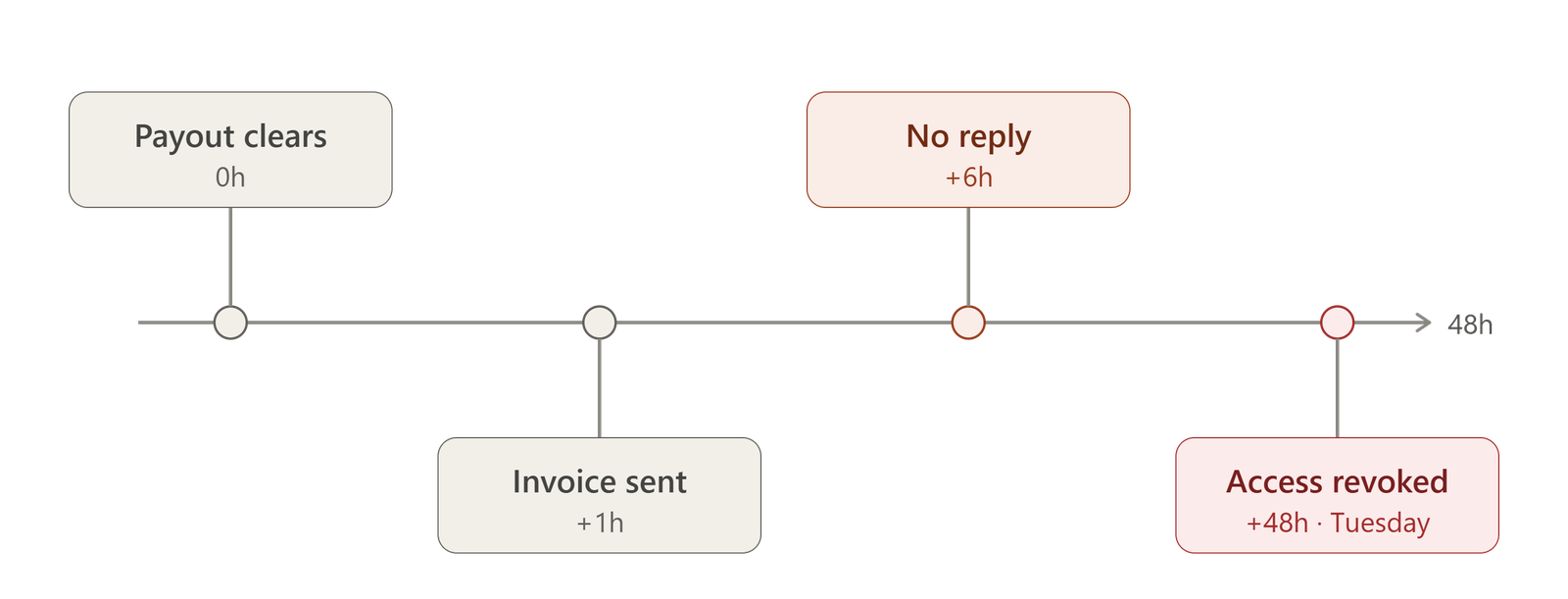
- The goodwill dependency. If revenue depends on manual invoices, it depends on a creator's attention that week. You send reminders, answer questions about deductions and wait for her to send the transfer. That's a collections process, not a growth process.
- The single point of failure. If the person who keeps the spreadsheet is sick, behind or mistypes a formula, the whole invoicing pipeline drifts out of balance.
2. Three layers worth systemizing
Moving away from constant manual coordination means building rules into your tools. There are three layers to look at.
Layer A: Traffic and content distribution. Scheduling and link-tracking tools can plan promotional posts across Reddit, X and TikTok and show which links convert, so you aren't relying on someone remembering to post or on guesswork. Each platform has its own rules about automation, so check them before you build anything on top of it.
Layer B: Shift attribution and chatter analytics. Managing a multi-shift chatting team by feel doesn't work. Chat-workflow CRM tools, such as Infloww or CreatorHero, track PPV sales, tips and chatter performance, so you can see who closed what without relying on manual shift reports.
Layer C: Financial settlement. The most important layer is the money. This is the one where taking manual steps out matters most, because it's where a missed step costs real money and strains the relationship.
3. Moving settlement onto the banking layer
The cleanest way to systemize the money layer is to execute the agreed split at the bank, so it doesn't depend on a message or a manual transfer. That's what Legacy Solutions is built around.
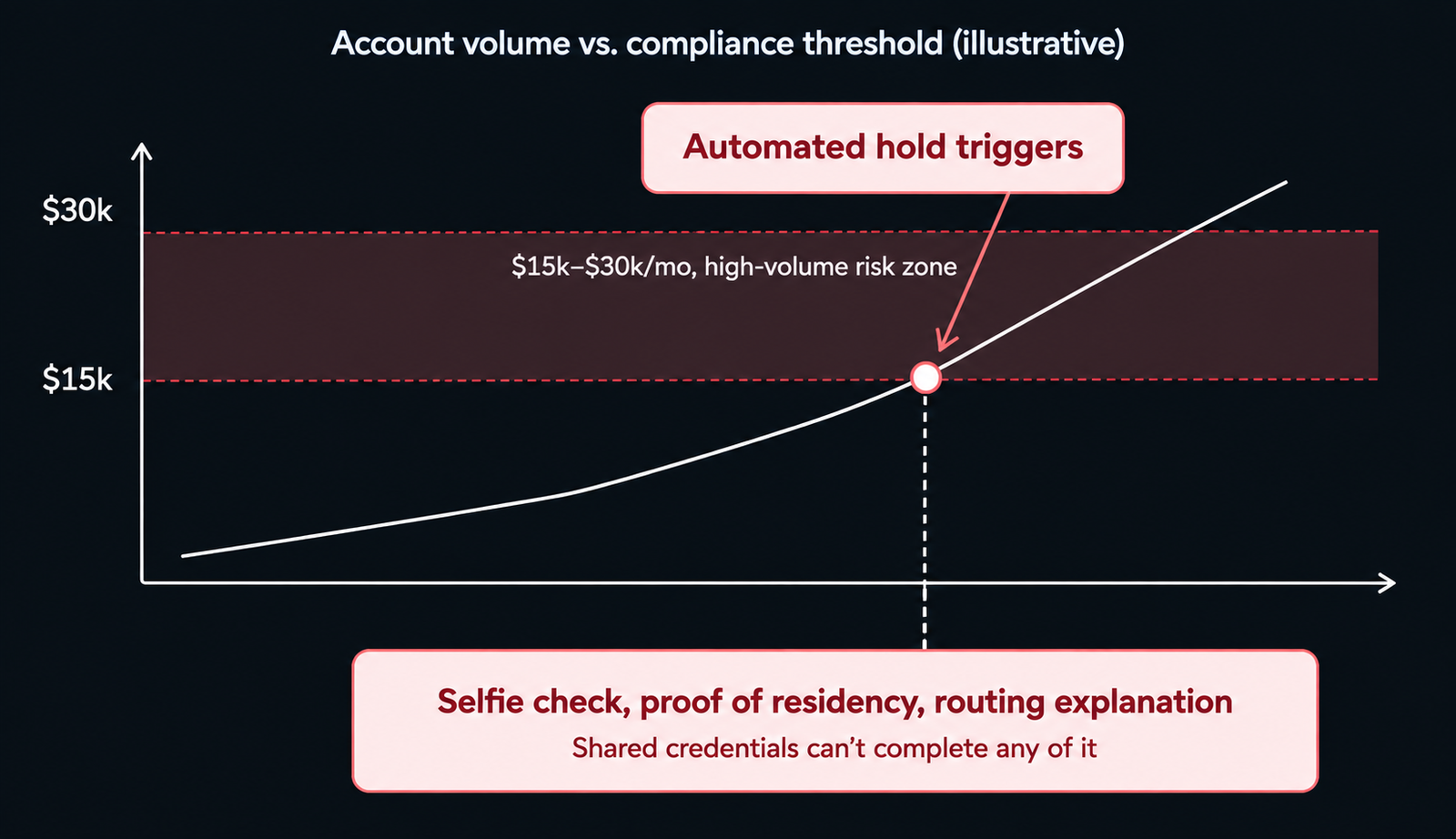
- Verification for both sides. The agency completes corporate verification and each creator completes her own legal ID and KYC process, in line with standard banking compliance.
- A dedicated account in the creator's name. A licensed banking partner opens it, so the payout destination matches her verified identity. That reduces the name-mismatch problems that come from mismatched accounts. It doesn't make an account immune to review, since platforms and banks run checks for other reasons.
- Automatic splitting. When OnlyFans releases the weekly payout, the agreed split executes automatically, including platform fees and chargebacks as defined in the contract. The agency's share goes to its own business account and the creator's share goes to hers.
For how the split is calculated and what the contract needs to define, see gross vs. net contract math. For the account structure, see how OnlyFans multi-party payouts work.
4. What changes when the money layer runs itself
The weekly invoice goes away, because the split settles when the payout lands. Both sides can see the same numbers in their own portals, so the creator isn't asked to act on anything and she can still see exactly what the agency's share is.
For the agency, the Monday routine gets shorter: open the dashboard, check that the week's splits settled, and move on. It doesn't remove the need for oversight. Someone still reviews the numbers, handles exceptions and manages the relationship. It removes one recurring manual process, and that's usually the one that causes the most friction. We cover the Monday routine in more detail in stop writing reminders on Monday morning.
Frequently asked questions
What should an agency systemize first?
Usually the money layer, since it's where a missed step costs the most and affects the creator relationship directly. After that, the repeatable parts of chatting and promotion.
Are chatter CRM tools safe to use?
It depends on the tool. OnlyFans has no official public API, so most connect in ways OnlyFans hasn't formally authorized. Read each tool's terms, check that it doesn't require sharing a password, and understand that the risk of account action isn't zero.
Does automating payouts replace the need to talk to creators?
No. Strategy, content and results still need regular conversation. What it replaces is the recurring payment request, so conversations can be about the work.
Can an agency automate settlement without changing its contracts?
Usually yes. The system applies whatever split the contract defines. What matters is that the contract is clear about gross versus net and about how chargebacks and chatter commissions are handled.